
If asked to name an Austrian dish, many might struggle. Maybe the more well-travelled would mention Wiener schnitzel. It’s delicious indeed but I was twenty-one by the time I discovered it, and only because a friend living in Innsbruck introduced me during a visit.
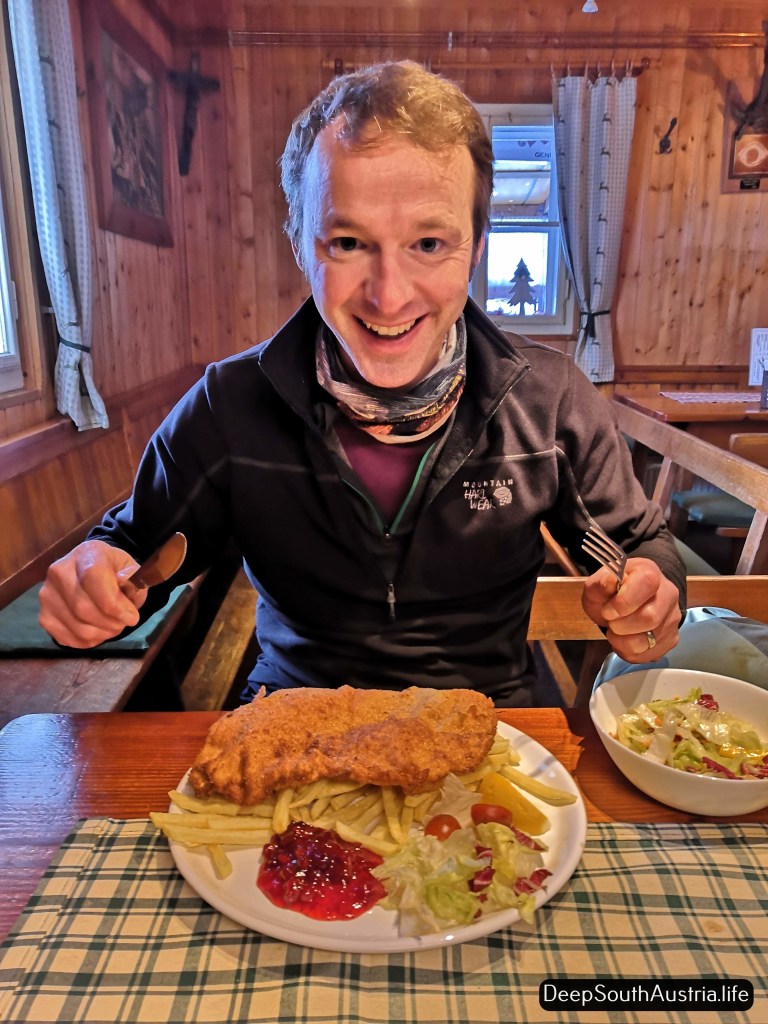
If you ask the same question of Britian, most would say fish ‘n’ chips. Which is essentially the same concept as schnitzel: take a piece of flesh, coat in breadcrumbs and batter, deep-fry, then serve with a side of fried potato and a lemon slice.
Both Wiener schnitzel and fish ‘n’ chips are found ubiquitously across the pubs, inns and fast-food joints of their respective nations. But few dishes from either country are widely known beyond their borders; you won’t find many Austrian or British restaurants abroad.
So in terms of culinary prowess, Austria is pretty much level pegging with Britain. Which is why my hackles began to rise when my otherwise wunderbar Austrian wife started taking jabs at my motherland’s menu.
Britain’s Culinary Reputation Abroad
“British food is bland, boring and salty,” she said. “It’s famous for it.”
(The irony is that my wife puts a lot of salt on her food and had reached twenty-nine by the time she tried a prawn.)
Now, I would accept such criticism from a French, Italian or Japanese person. Indeed, in a previous relationship with a fiery mademoiselle, I experienced first-hand how central food was to her being.
During our visits to her home in France, if the family weren’t eating, they were cooking. If they weren’t cooking, they were shopping for ingredients, taking their sweet time to fondle each onion, squeeze each sausage, pick the perfect piece of meat.
And if they were doing none of the above, they were fiercely debating the menu for the following day. All in all, I’d estimate around 77.5% of all life in France involves food.
It’s true that British cuisine does not enjoy a flattering reputation abroad. But I’d argue that’s an outdated notion, borne of bland, boring and salty ‘meat and two veg’ from last century.
British cooking is now born again. There’s a myriad of delicious Anglo-hybrid offerings – which have become supermarket staples – as well as modern twists on traditional fare.
Indeed, whilst France, Japan and Italy hold the number one, two and three positions for the most Michelin starred restaurants in the world, the UK – at number seven – is catching up. Austria is 26th.
So neither Austria nor Britain are renowned for their food. But Austria, just like Britain, has many excellent culinary delights, unknown beyond its borders. Enter: the laugenecke.
Laugenecke: king of croissants
If you plug laugenecke into google translate, it spits out ‘pretzel corner’. A more literal translation is ‘lye corner’, because the dough is immersed in lye before baking.
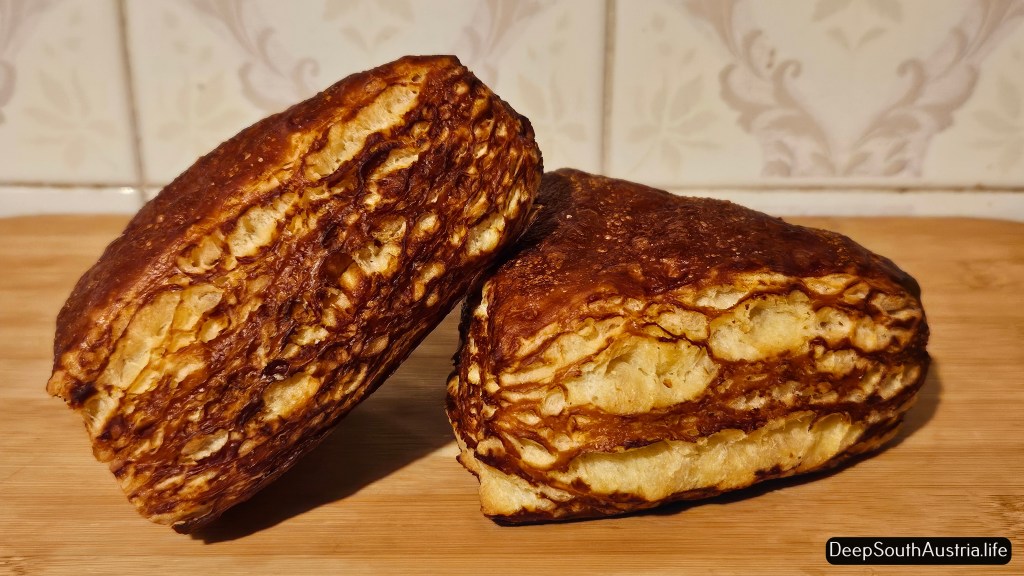
But while other members of the laugen family (laugenstangerl and laugensemmel for example) have a pretzelized sheen, slightly chewy texture, and chunky salt grains on top, the laugenecke must have been fathered illegitimately by a rogue French croissant, for it shares no DNA with the pretzel.
With lovely soft, buttery, bubbly dough, there’s no doubting its lineage. It may not look like papa but the laugenecke is unmistakably a member of the croissant clan.
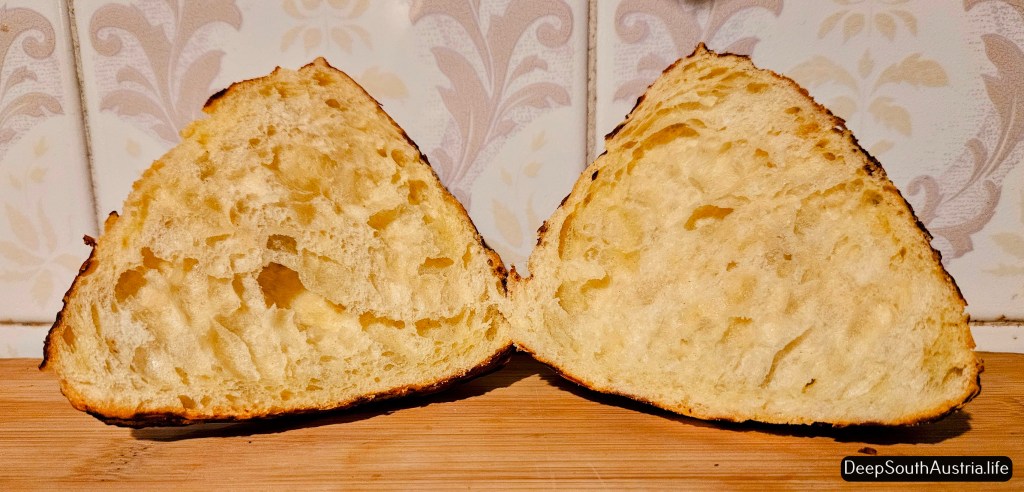
I’m a big fan of the French croissant; done right, they are one of the finest pastries on earth. But risking the wrath of my Francophile readers, I’ll say that Austria’s laugenecke is even better.
Ideal as a snack in its own right, fresh or toasted, or filled as a sandwich, it has the taste and texture of the croissant but there’s just that little more crispy-crunch on top, and you get a chunkier, weightier pastry.
Beware the Kipferl: Austria’s fake croissant
A final note of caution for those who venture into the bäckerei. Confusingly, Austria also has the kipferl, a bakery item that looks like a croissant but resembles it in form only.
Do not be fooled. This croissant impersonator is nothing more than a lowly bread roll masquerading as something more fancy.
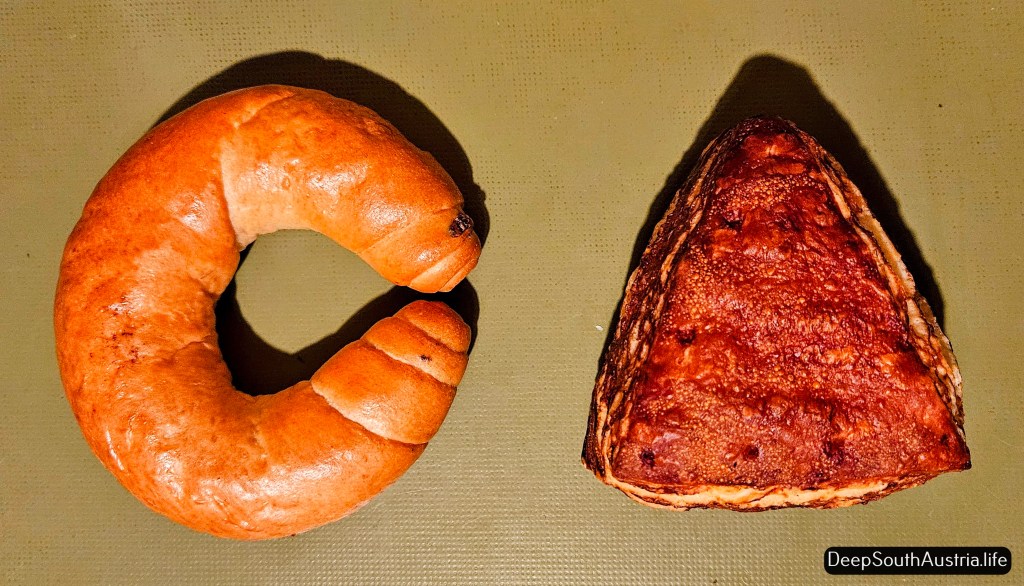
So remember: in Austria, the pretzel-corners aren’t pretzels; the croissant-shaped pastries are rolls, and the triangle-shaped laugenecken are croissants.
Alles klar?
Mahlzeit!



 Deep South Austria
Leave a reply to Benito Aramando Cancel reply